In this tutorial, we explore adaptive experimentation using Meta’s Ax with the modern Client API. We work through a complete workflow where we tune a RandomForest model on a synthetic classification dataset while balancing predictive accuracy against model footprint. We begin by defining a mixed search space with integer, float, log-scaled, and categorical parameters, then…
Developers and customers building production AI agents need higher token efficiency, lower latency, and more reliable performance. Our Flash series of models is built to meet the sweet spot of efficiency and quality to enable scaling agentic workflows. Building on Gemini 3.5 Flash, we’re introducing new Gemini models: 3.6 Flash: Our workhorse model that delivers…
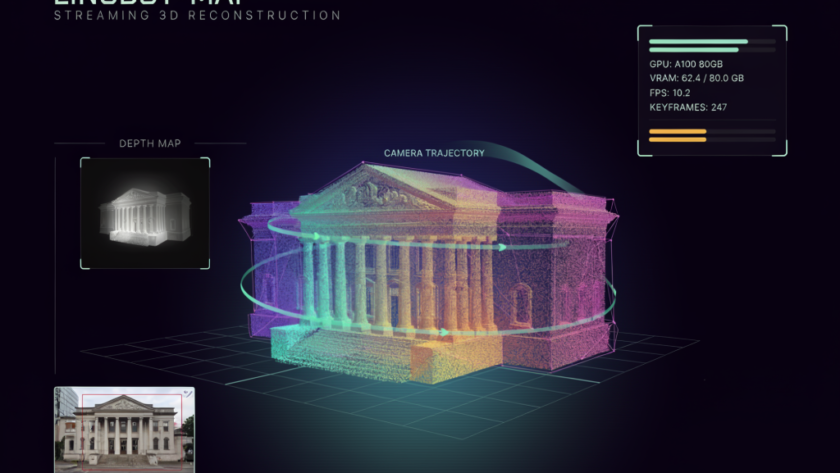
The idea that AI agents need ‘eyes’ – real visual information from the real world, and not just paperwork and dashboards, have become a marker of advancement in construction technology. Yet mostly what has been referred to as an “agent” today is not actually acting based on what it sees. It narrates and alerts while…
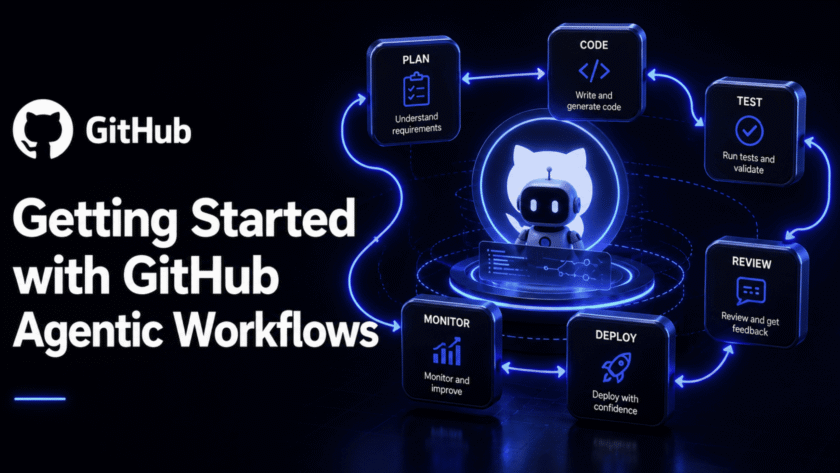
# Introducing GitHub's Agentic Workflows
It's 9 AM on a Monday, and forty-three new issues are sitting in the backlog. Some are real bugs. Some are duplicate feature requests. A couple are just someone venting about a typo. Whoever is on triage duty this week is going to spend the first two hours…
Onton, a San Francisco-based search and discovery company, has released Ontology 1, a neurosymbolic model for complex, conversational, multimodal product search. On a 90-query benchmark scored by three independent LLM judges, Ontology 1 reached a mean precision@10 of 0.630, against 0.543 for Google Shopping and 0.469 for Amazon. It did this while indexing roughly 1%…
Our newest music generation model, Lyria 3.5, delivers significant advancements across musicality, lyrics, and vocal quality, empowering you to craft richer tracks. We’re rolling it out today in Google Flow Music, where we want to help you create songs you love, with creative control. Here's what’s new: Improved musicality: Create richer, more complex melodic structures…
# Introduction
Most people picture building a voice agent as stitching three things together: speech-to-text (STT), a large language model (LLM), and text-to-speech (TTS). Wire them up, and you're done. That picture is correct as far as it goes, and it describes the simplest architecture, where each stage waits for the previous one…
print("\n[10] Plots")
k = min(4, S)
idxs = np.linspace(0, S - 1, k).astype(int)
fig, axes = plt.subplots(3, k, figsize=(3.1 * k, 7.2))
axes = np.atleast_2d(axes)
for c, i in enumerate(idxs):
axes[0, c].imshow(rgb[i].transpose(1, 2, 0)); axes[0, c].set_title(f"frame {i}", fontsize=9)
d = depth[i].squeeze(-1)
axes[1, c].imshow(d, cmap="turbo", vmin=np.percentile(d, 2), vmax=np.percentile(d, 98))
axes[2, c].imshow(depth_conf[i] > THR,…
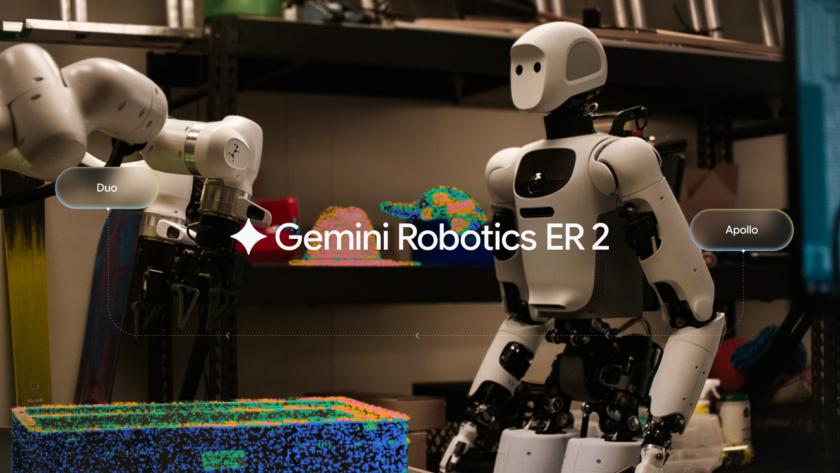
For robots to assist humans in everyday environments, accurate spatial reasoning is not enough. Robots must also think fast, timing their decisions and reasoning with the real-time speed of the physical world. That’s why today we’re launching Gemini Robotics ER 2, our most capable “embodied reasoning” model for robotics. Think of Gemini Robotics ER 2…
Google DeepMind has released Gemini Robotics 2, the intelligence layer for its next generation of robots. The release moves the stack past table-top manipulation into whole body control, five finger dexterity and multi robot teamwork. It ships as three separate models with three different access tiers.
Most robots today are pre-programmed or tele-operated for narrow,…