Last week, Reducto announced r-1. It is the first model in a new parsing family built on a rewritten architecture, and it replaces the company’s multi stage agentic OCR with…
Building on the momentum of 3.7 Flash from three weeks ago and marking our third Flash release in only six weeks, today we’re introducing Gemini 3.8, our best reasoning and…
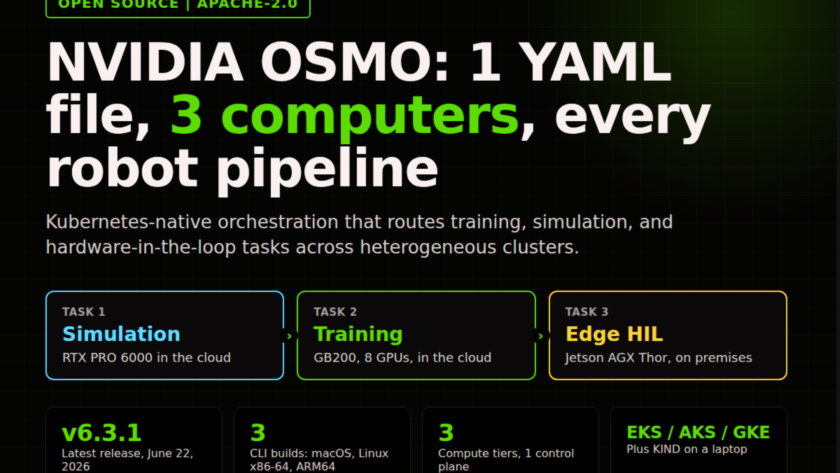
Robot developers do not have one compute problem. They have 3. A policy is trained on GB200 or H100 clusters, tested in Isaac Sim on RTX GPUs, then validated on…
Ask a chatbot "which promotion should we run more of," and it answers in one breath. It picks a number, states it with confidence, and stops. It picks the promotion…
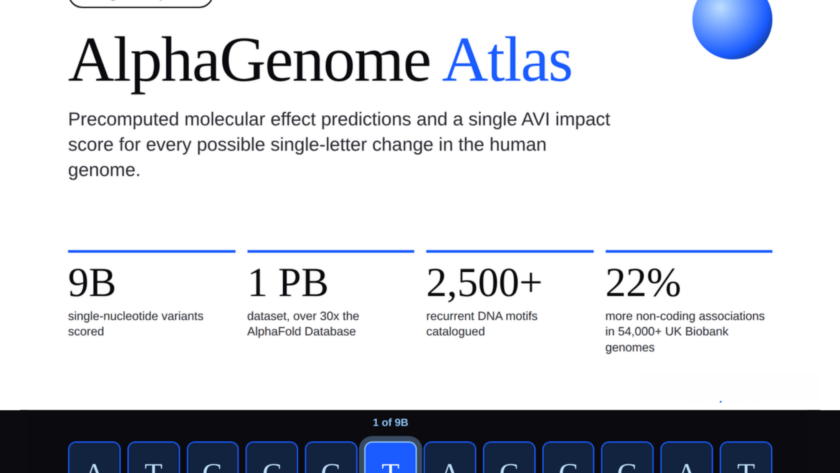
Google DeepMind has released AlphaGenome Atlas, a catalogue of precomputed predictions for the molecular effects of every possible single-nucleotide variant in the human genome. That is roughly 9 billion single-letter…
Defenders wanting to use advanced AI have faced a difficult dilemma: adopt enormous frontier models that could be expensive to deploy and difficult to control across enterprise codebases, or turn…
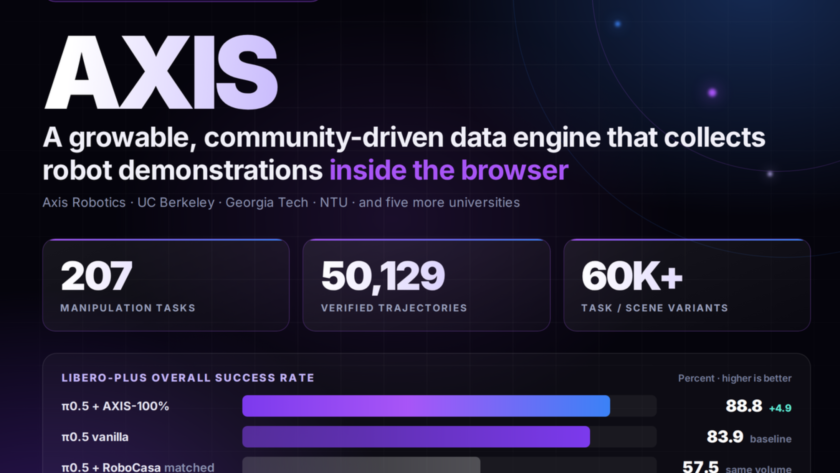
Robot manipulation datasets have grown far slower than the models trained on them, mostly because collection stays closed and centralized. Expert operators gather demonstrations on lab hardware, process them offline,…
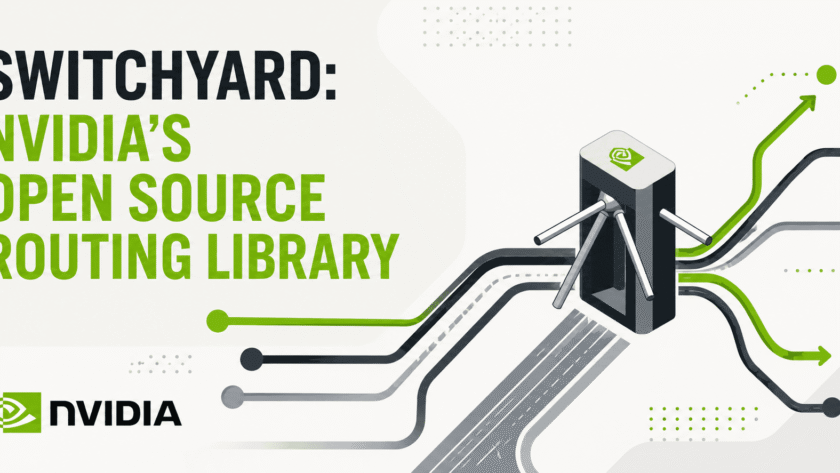
Most production AI agents still send every LLM call to the same expensive frontier model. Classification steps, simple tool calls, progress checks, and hard reasoning all hit the same endpoint.…
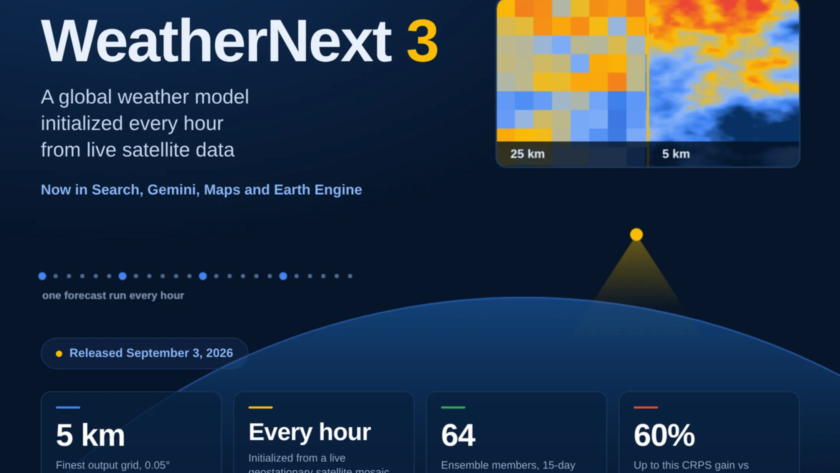
AI weather models have spent three years closing the gap with physics-based forecasting, but two problems stayed open: resolution too coarse for local terrain, and initialization tied to numerical weather…
Real-world data at continuous global scale WeatherNext 3's biggest leap forward is what it learns from. Most AI weather models, including WeatherNext 2, are trained on data from numerical weather…